Every plant owner eventually asks the same thing: how often should you water your indoor plants? The honest answer is that it depends, because plant type, pot size, light, and the season all change how quickly the soil dries out. In this guide, we’ll go through the key factors and simple checks that make watering easier, so you can learn how to water houseplants with confidence and pick the right water for indoor plant care.
How Often Should You Water Your Indoor Plants?
There is no single schedule that works for every home, so the honest answer to “how often should you water your indoor plants?” is: it depends. Plant type, pot size, light, temperature, humidity, and the season all change how fast the soil dries out. A fern in a bright bathroom and a snake plant in a dim hallway can need very different care, even under the same roof.Instead of watering on a fixed calendar, learn to read your plant and its soil. That is the heart of how to water houseplants successfully, and it is the best way to avoid both overwatering and underwatering.
Factors That Change Watering Frequency
Finger test: Push a finger about an inch (2-3 cm) into the soil. If it feels dry, it’s time to water.
Lift the pot: A dry pot feels much lighter than a freshly watered one.
Use a tool: A water meter for indoor plants is useful for large or deep pots, where the finger test can’t reach the roots.
Watch the leaves: Drooping, crispy edges usually mean thirst. Yellow, soft leaves usually mean too much water.
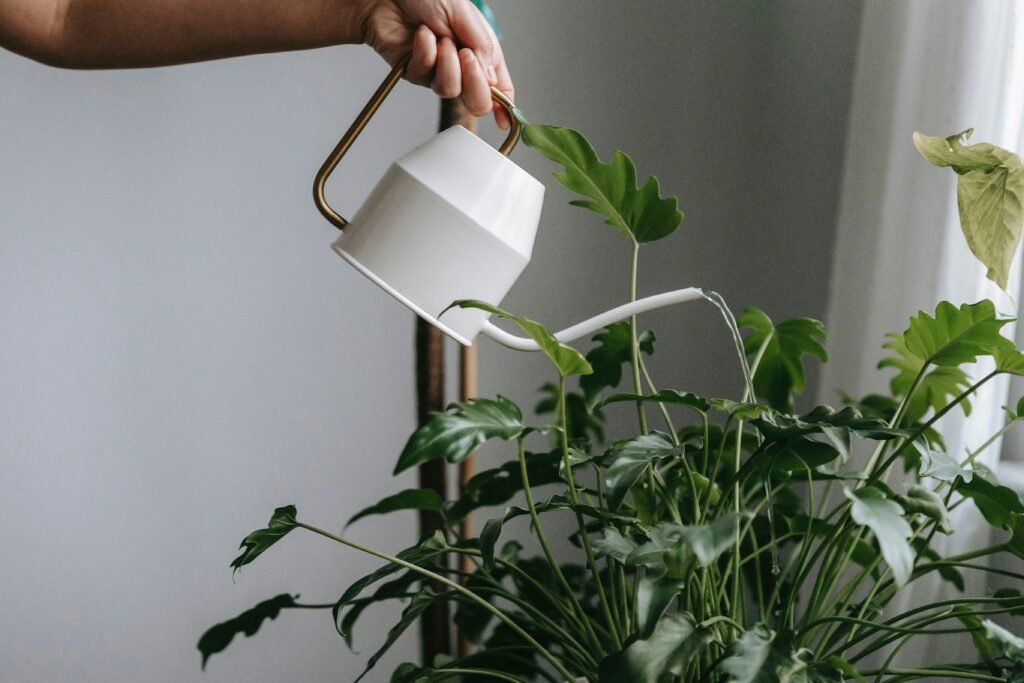
When you water, soak the soil thoroughly until water runs out of the drainage holes, then empty the saucer. This encourages deep roots, and it works better than small sips every day.
Does the Type of Water Matter?
Yes. Many people ask about the best water for indoor plants, and whether rain water is good for indoor plants (it usually is, since it has no added minerals or chlorine). Distilled water for indoor plants is also a safe choice for sensitive species. We cover this in
Smart way for watering plant
If you travel often or forget to water, simple helpers can make watering for indoor plants less stressful. An indoor plant watering system, such as drip spikes or wicks, delivers water slowly. Self watering indoor planters have a built-in reservoir, which suits thirsty plants. For busy plant owners, self watering for house plants is a low-effort way to keep the soil evenly moist.
How to Water Houseplants the Right Way
Knowing how to water houseplants is just as important as knowing when. Follow these simple steps:
Check the soil first. If the top inch is dry, it’s time to water.
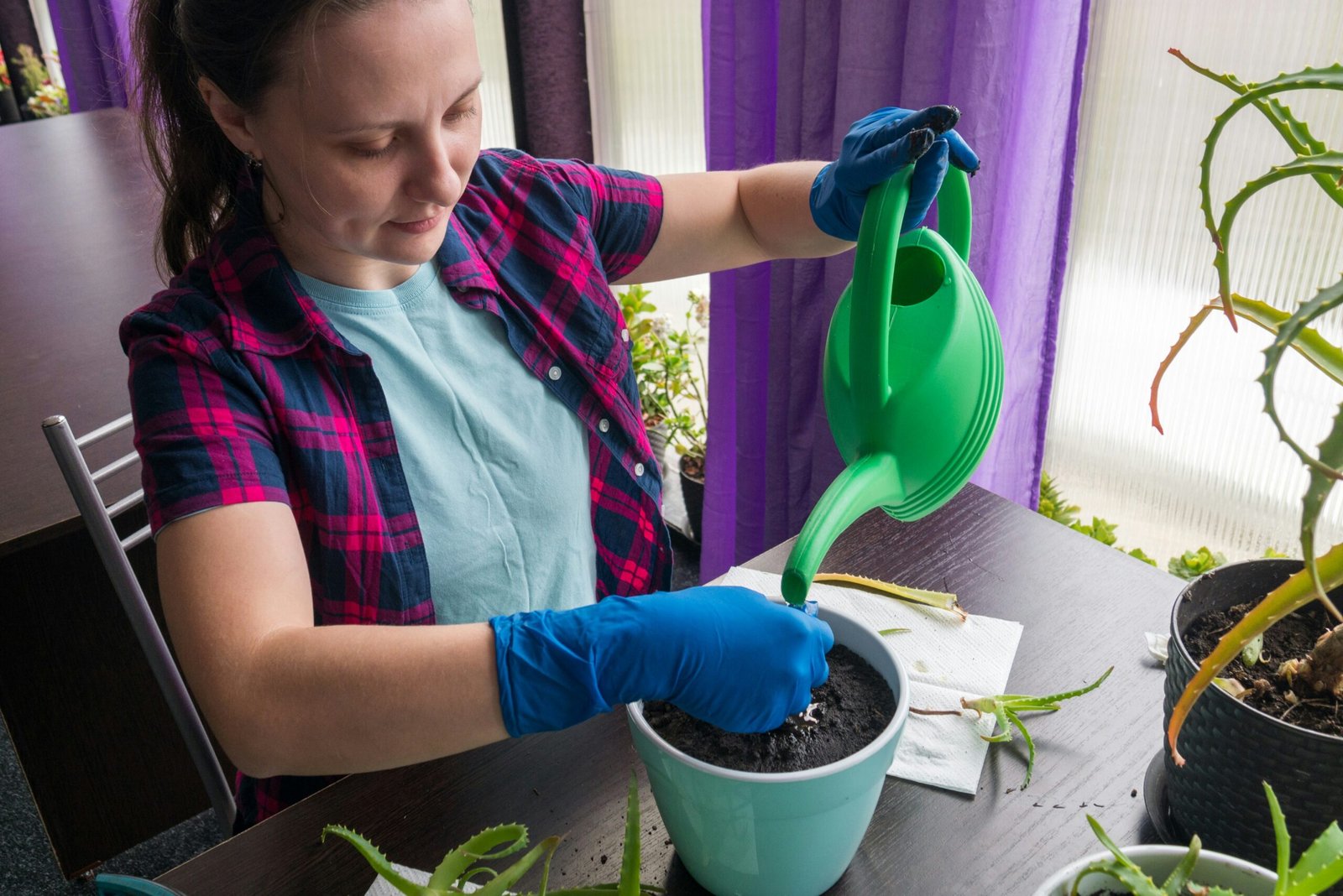
Water slowly and deeply. Pour until water drains out of the bottom, so the whole root ball gets wet.
Empty the saucer. Standing water causes root rot.
Adjust for the season. Most plants need less water in winter.
Not sure how much water your plant needs? Try our water plant calculator. Enter your plant type and pot size, and it estimates the right amount of water, so you can avoid guesswork with watering for indoor plants.
Top Watering vs Bottom Watering
Top watering means pouring water over the soil until it drains from the bottom. It is the easiest method and helps flush out extra salts from the soil. Bottom watering means placing the pot in a tray or sink with a few inches of water and letting the soil soak it up through the drainage holes for 15 to 30 minutes. It encourages deep roots and works well for plants that dislike wet leaves, such as African violets. For most houseplants, either method works, and you can switch between them
Signs of Overwatering and Underwatering
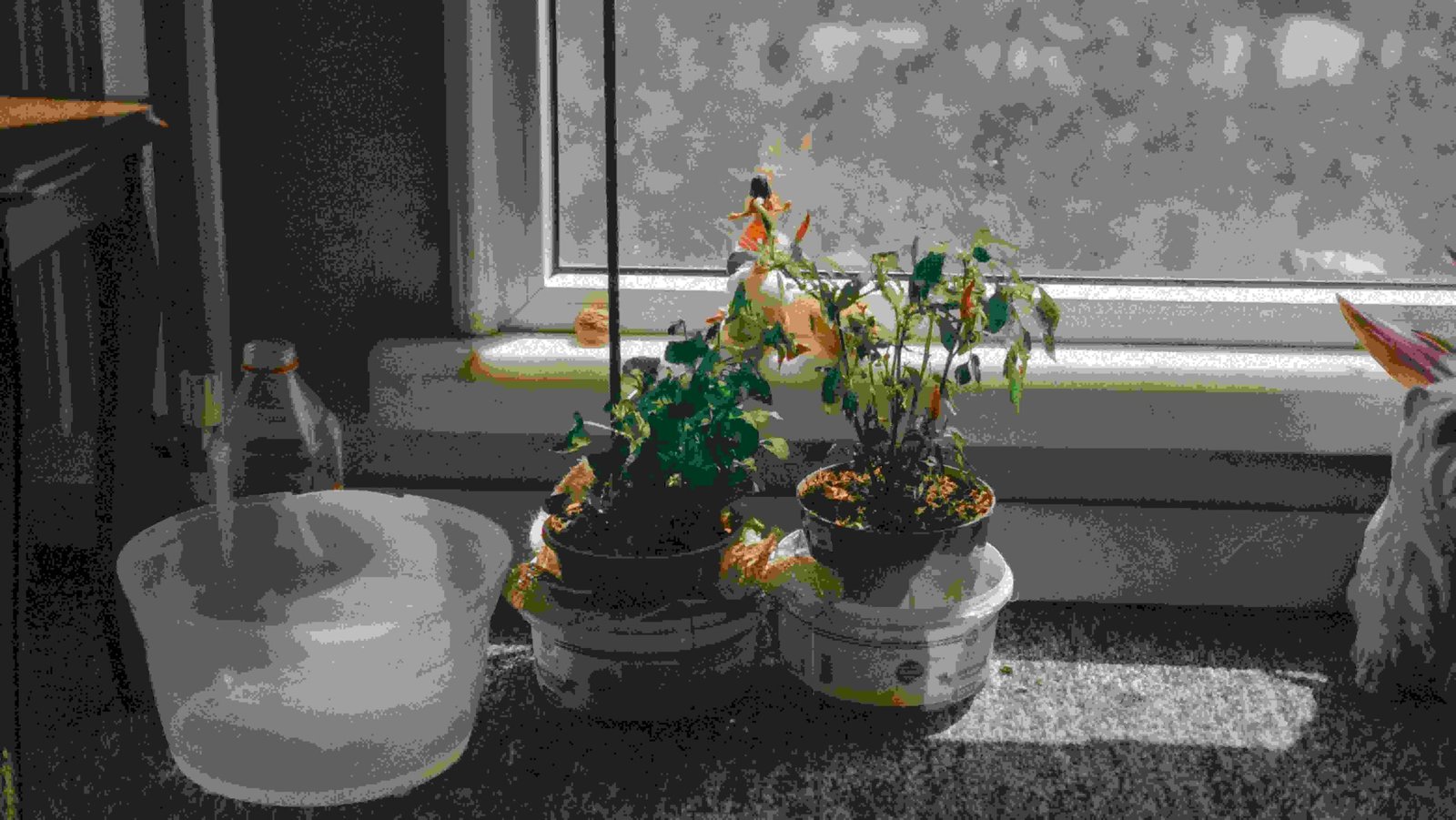
Overwatering is the most common mistake. Look for yellow, soft leaves, soil that stays wet for days, a musty smell, or mold on the surface. An underwatered plant shows the opposite: drooping leaves, crispy brown edges, and dry soil that pulls away from the pot. If you see these signs, adjust your routine, and always check the soil before watering again.
Best Water for Indoor Plant Care
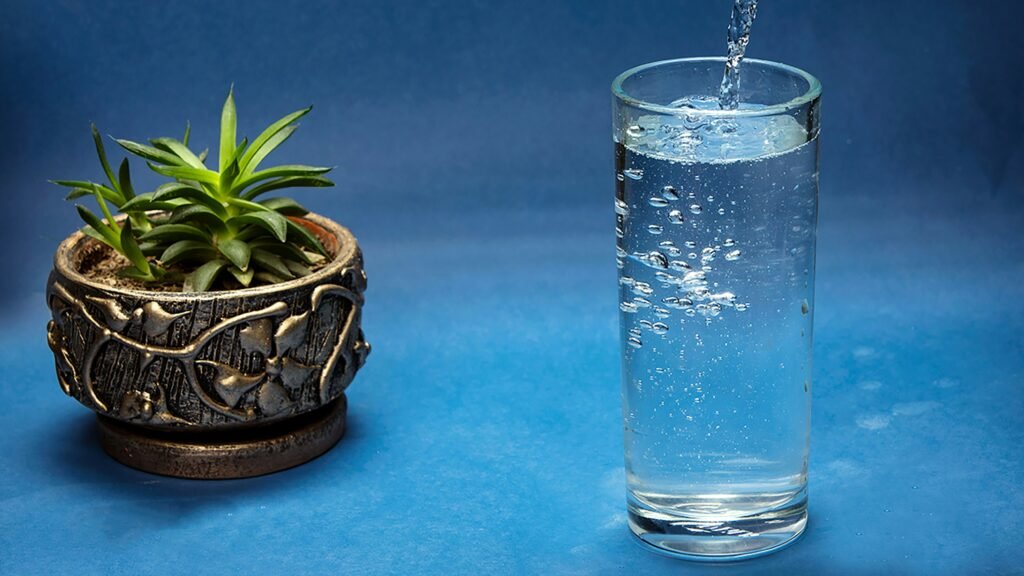
Choosing the best water for indoor plant care is just as important as knowing when to water. What type of water is best for plants depends on what’s in your tap: minerals, chlorine, and salts can slowly build up in the soil and stress sensitive plants. Most houseplants do well with tap water that has been left out overnight, but rainwater for indoor plants and filtered water for houseplants are gentler options. If your tap water is hard, you can dechlorinate it or use a tap water conditioner for plants. Distilled water for plants is another popular choice, and the answer below explains when it makes sense.
Is Distilled Water Good for Plants Indoors?
Yes, you can use distilled water for plants indoors; it is safe and free of minerals and chlorine, but it also lacks nutrients, so feed your plants occasionally.
Why Room-Temperature Water Is Better
Room-temperature water is the best water for plants indoors because it is gentle on the roots. Very cold water can shock the roots and slow growth, while hot water can damage them. It also helps with tap water and plants: if you leave tap water in an open container overnight, it reaches room temperature and some of the chlorine evaporates, which is a simple way to make tap water safe for plants.