
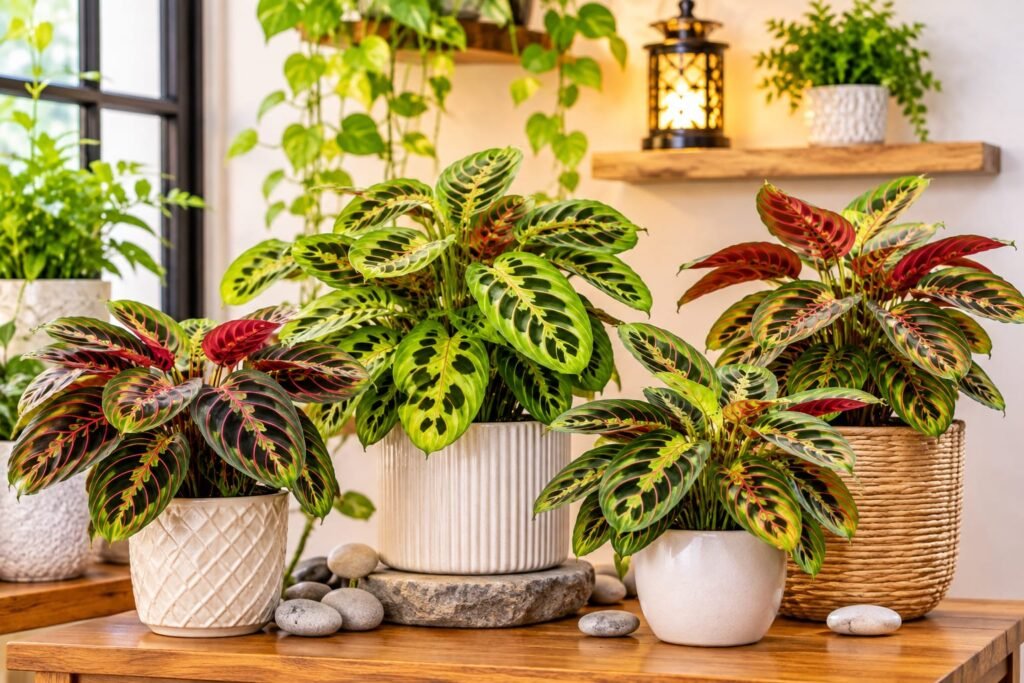
In this section complete guide, we will explore prayer plant care and its essential growing requirements to help you keep your plant healthy, attractive, and thriving indoors. We will discuss prayer plant lighting, including bright to medium indirect sunlight, and explain why it is called a prayer plant and how its leaves fold like praying hands. You will also discover why some varieties develop pink prayer plant leaves, what causes a leggy prayer plant, how big prayer plants can grow, and whether they can be kept outdoors.
Our guide will cover prayer plant soil and potting, the best drainage potting soil, watering methods such as top watering, and suitable fertilizers. We will also explore prayer plant propagation, water propagation, and humidity requirements. In addition, we will discuss common prayer plant leaf problems, including yellow and brown spots on leaves, pests and diseases, and lighting issues. Whether you are a beginner or an indoor gardening enthusiast, this guide will help you understand every important aspect of growing prayer plants successfully.
Planting prayer plant
Have you ever wondered why this beautiful plant is called a prayer plant? Let me explain! The prayer plant gets its name from its fascinating leaf movements, which resemble hands folded together in prayer. During the day, its leaves spread out to absorb light, while in the evening, they gradually fold upward, creating the appearance of praying hands plant. This natural movement makes the prayer plant one of the most interesting and eye-catching low-light indoor plants. Its unique behavior has fascinated plant lovers for generations and is also associated with spiritual symbolism and peacefulness.
Prayer Plant Lighting
Prayer Plant Lighting Requirements
· Low Light Indoor Plants
· Low Light Hanging Plants Indoor
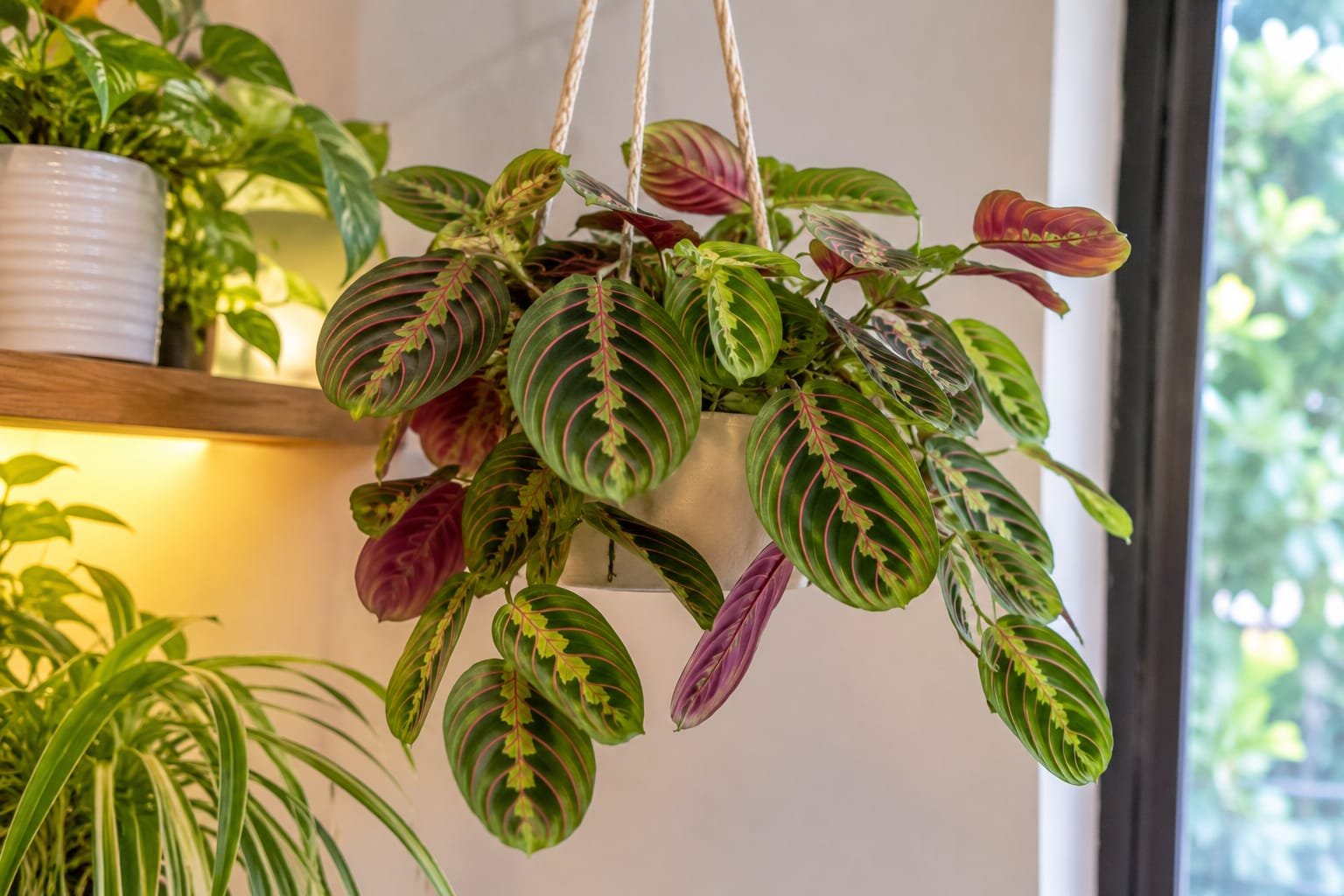
Prayer plants grow best in bright to medium indirect sunlight. Avoid direct sunlight for long periods, as it can burn their delicate leaves. They can tolerate low-light indoor spaces, but too little light may cause leggy growth. During winter dormancy, provide bright indirect light to help maintain healthy growth. Proper lighting is essential for your prayer plant's overall health, encouraging stronger growth, fuller foliage, and healthy leaf development. Giving it the right amount of light will help it grow to its full potential.
Prayer Plant Watering
Prayer plants need regular watering, but it is important to check the soil moisture before adding water. Allow the top layer of soil to dry slightly before watering. During spring and summer, water your plant once or twice a week, depending on its soil condition. In fall and winter, reduce watering to once a week or as needed because the plant needs less water during cooler months.
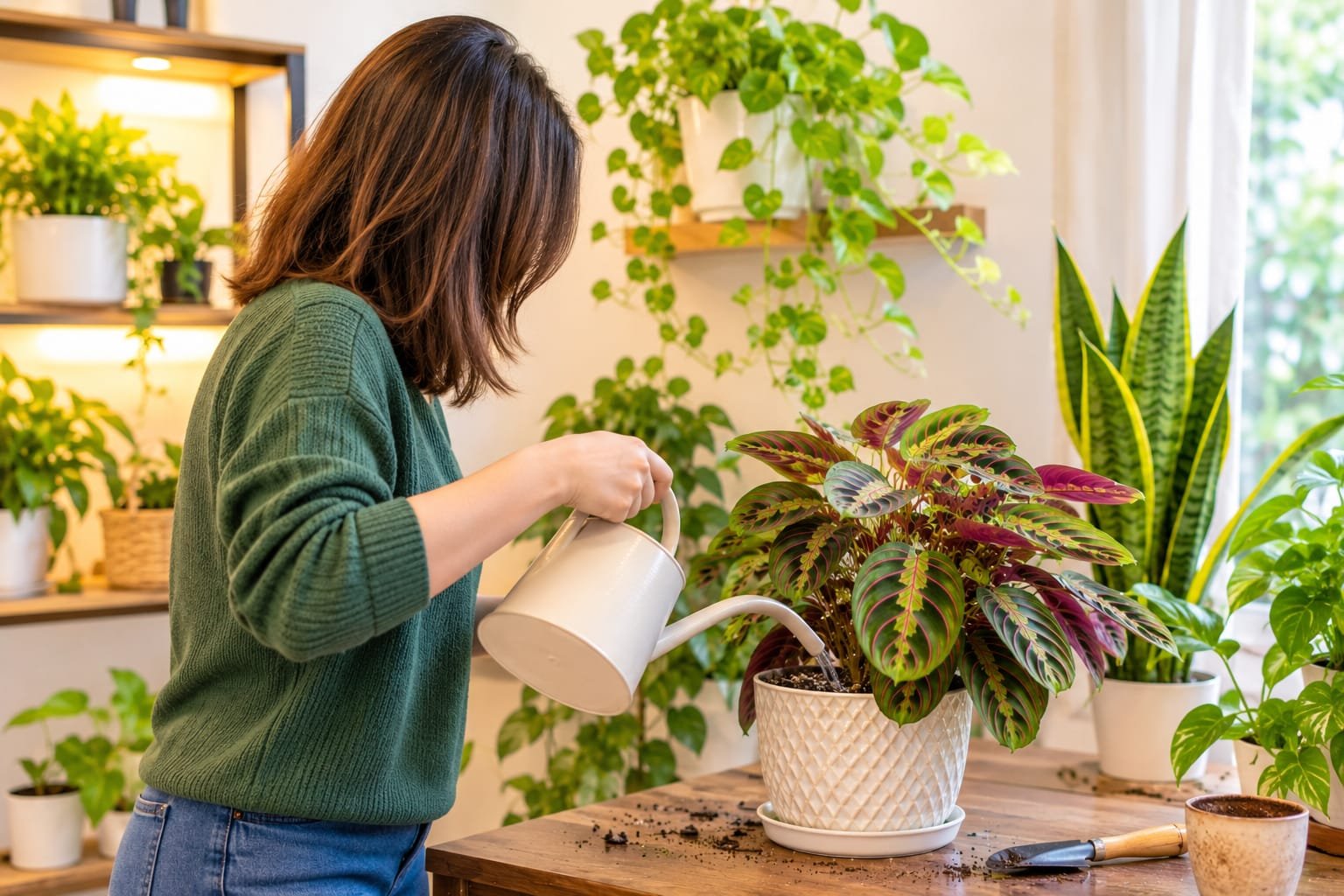
You can use both top watering and bottom watering methods to keep the soil evenly moist. If possible, use filtered water, as prayer plants can be sensitive to minerals and chemicals in tap water. Avoid overwatering, as too much moisture can cause root rot and fungal problems. Always check the soil before watering to maintain the right moisture level and help your prayer plant stay healthy and grow well.
Prayer Plant Soil and Potting
Prayer plants grow best in loamy, lightweight, and well-draining soil that holds enough moisture without becoming soggy. The best drainage potting soil should improve soil drainage and allow proper airflow around the roots. A good loamy potting mix with perlite and coco coir is ideal for indoor plants, helping maintain moisture balance and supporting healthy root growth.
Prayer Plant Propagation
Prayer plant propagation is commonly done through division. Carefully remove the plant from its pot, separate the roots and stems into smaller sections, and place each division in a shallow pot with well-draining soil.Water the newly planted sections and keep them in a warm, humid spot with bright indirect light. Maintain even soil moisture to help the new plants establish healthy roots and grow well.
Fertilizer
Prayer plants are slow-growing indoor plants, so proper fertilization helps encourage healthy new leaves and stronger growth. I personally recommend using a balanced liquid NPK fertilizer (20-20-20) diluted to half strength. I use this fertilizer for my own indoor plants and find it a good choice for prayer plants. However, you can also use other balanced fertilizers suitable for indoor plants.
Humidity
Prayer plants thrive in humid environments with normal household temperatures between 60°F and 80°F. Proper prayer plant humidity helps maintain healthy leaves and better growth. If the air is too dry, use a small humidifier nearby or place the plant on a pebble tray filled with water to increase moisture.
Types of Prayer Plants
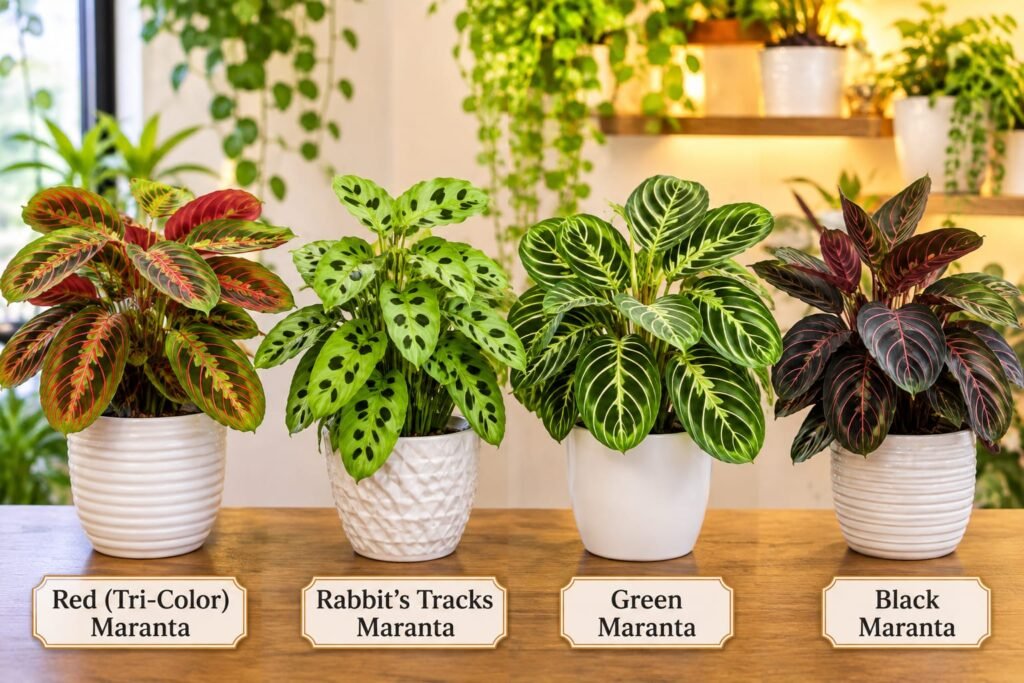
The Prayer Plant, scientifically known as Maranta leuconeura, is a popular tropical indoor plant known for its beautiful patterned leaves and unique leaf movements. There are several varieties of prayer plants, each with different leaf colors and patterns. Some of the most common types include:
· Red (Tri-Color) Maranta
· Rabbit’s Tracks Maranta
· Green Maranta
· Black Maranta
Prayer Plant Pests and Diseases
Common Prayer Plant Pests
Prayer plants can sometimes attract common pests such as spider mites and mealybugs. Check the undersides of leaves for tiny insects, fine webbing, white cotton-like powder, or damaged leaves, as these may indicate a pest infestation.
Common Prayer Plant Problems
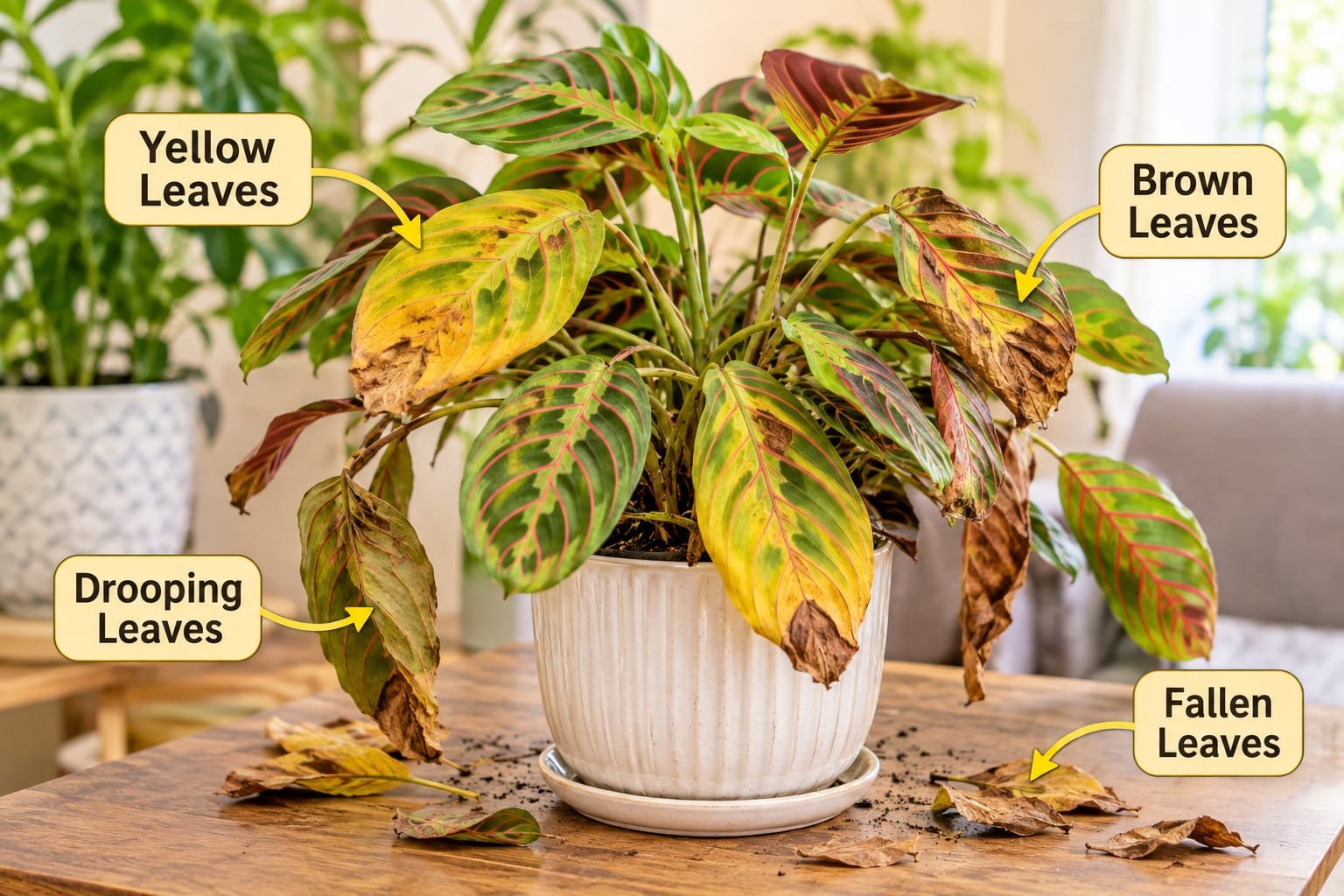
Prayer plants may develop leaf problems due to improper watering, lighting, humidity, or changes in their growing environment. Some common signs include yellow leaves, brown leaf edges, and drooping leaves.
Why Are Prayer Plant Leaves Turning Yellow?
Yellow leaves are often caused by overwatering, underwatering, or insufficient light. Too much direct sunlight can also make leaves look pale or faded. Overwatering may lead to root rot, so always check the soil moisture.
Why Are Prayer Plant Leaves Turning Brown?
Brown leaves or crispy edges usually indicate underwatering or low humidity. Too much direct sunlight can also damage the leaves. Keep the soil slightly moist and maintain suitable humidity to help prevent this problem.
Why Is My Prayer Plant Drooping?
Drooping leaves can result from underwatering, sudden temperature or humidity changes, pest infestations, or excessive fertilizer. Check the soil, inspect the leaves for pests, and keep the plant in a stable environment to help it recover.
Prayer Plant Care: Quick Tips
· Where to Put It: Place your prayer plant in an area with bright to medium indirect sunlight. Avoid direct sunlight, as it can scorch and damage the leaves.
· How to Water It: Water your prayer plant once or twice a week during spring and summer, depending on soil moisture. In fall and winter, reduce watering to about once a week or when the top layer of soil begins to dry.
· Best Soil Type: Prayer plants prefer lightweight, well-draining, loamy, and slightly acidic soil. A mix containing coco coir and perlite can help maintain moisture while providing proper drainage.
· Secret Care Tip: Keep your prayer plant in a warm, humid environment, clean its leaves regularly, and avoid sudden changes in temperature. These simple steps can help maintain healthy leaves and encourage better growth.
Frequently Asked Questions About Prayer Plants
1. Are prayer plants toxic to cats?
No, prayer plants (Maranta leuconeura) are considered non-toxic to cats and dogs, but it is still best to keep them out of reach of pets and small children.
2. What Temperature Is Best for Prayer Plants?
Prayer plants prefer normal indoor temperatures between 60°F and 80°F (16°C–27°C).
3. How much light does a prayer plant need?
Prayer plants grow best in bright to medium indirect sunlight and should be protected from harsh direct sun.
4. How often to water prayer plant?
Water when the top layer of soil begins to dry, usually once or twice a week during warmer months and less often in winter.
5. Why is my prayer plant turning yellow?
Yellow leaves are commonly caused by overwatering, underwatering, or unsuitable lighting conditions.
6. Why Are My Prayer Plant Leaves Turning Brown?
Brown leaf edges are often a sign of low humidity, underwatering, or too much direct sunlight.
7. How to propagate prayer plant?
You can propagate a prayer plant by carefully dividing its roots and stems into smaller sections and planting them in separate pots.
8. Does a Prayer Plant Need Pruning?
Regular pruning is not necessary, but trimming damaged leaves and long stems can help maintain a neat, bushy appearance.
9. What Other Indoor Plants Can I Grow at Home?
If you enjoy growing indoor plants and want to explore another beautiful houseplant, check out our complete Fiddle Leaf Fig Care Guide to learn how to grow and care for this popular plant.